Course
Select: Choosing Responses
Build a story catalog, learn the four-criteria selection framework (Scope, Relevance, Uniqueness, Recency), and master techniques for choosing the right story for any behavioral question.
Level:
Premium video
Sign in & purchase Premium to watch the full video.
You walk into a behavioral interview and the interviewer asks: "Tell me about a time when you disagreed with a cross-functional team member." Your mind races through a half-dozen possibilities. Which story do you pick? What if your best conflict story is from three years ago? What if you have two equally strong options?
And that's just one question. You might face ten questions in a single interview, and you won't know what they'll ask ahead of time.
Choosing the right story for a specific question means doing two distinct things: choosing available stories before the interview, and then picking the right one in the moment. Both require some kind of strategy, which is what this article is all about.
Why You Need a Story Catalog
Scrambling to think of examples on the spot costs you time and mental bandwidth you can't afford. Your working memory is already occupied with impression management, reading the interviewer's reactions, and structuring your responses clearly. Adding "search through my entire career history" to that cognitive load is a recipe for mediocre answers and a lot of stress.
The solution is obviously to identify stories in advance, to have them organized, and already mapped to signal areas so you can quickly identify the best story for any question.
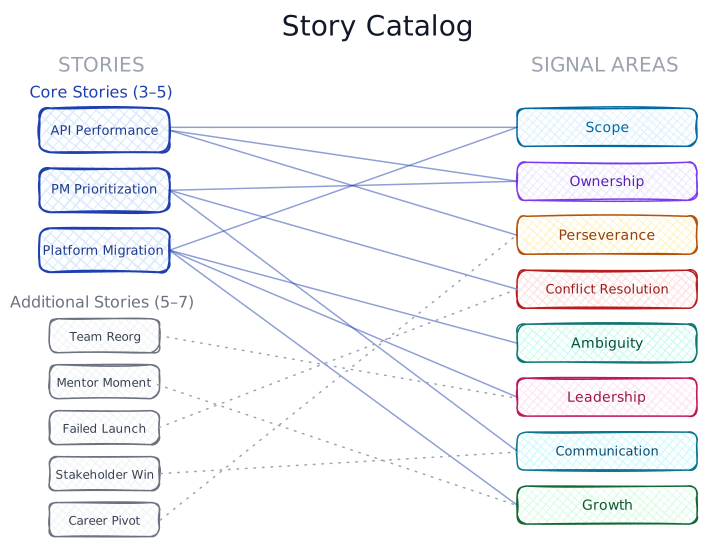
Story Catalog
Your catalog should include two types of entries:
- Core stories represent your significant projects. These are the stories you'd most want to tell a hiring manager if you only had a few minutes. Each core story likely demonstrates multiple signal areas at once and represents the peak of your capabilities. Most candidates need 3 to 5 core stories.
- Additional stories fill in the gaps. Maybe your core stories are all about technical complexity, but you need examples of conflict resolution. Maybe they're all recent, but you want an older story that shows long-term impact. Additional stories give you coverage across all signal areas and provide variety when you've already used a core story. Aim for 5 to 7 additional stories.
Don't fixate on these story count numbers. The goal is confidence that you can respond to almost anything they throw at you.
Finding Your Core Stories Through Journaling
Core Story Examples at Each Level
Building a Story Catalog
Filling Coverage Gaps
Ways to Help You Identify Stories
Choosing Stories In the Interview
1. Scope
2. Relevance
3. Uniqueness
4. Recency
Why This Priority Order Matters
The Menu Technique: When You Have Multiple Strong Options
When You Don't Have a Relevant Story
Don't Lie
Personal and School Stories
Responding to Values Questions
Responding to Hypothetical Questions
Exercise: Build Your Story Catalog
What's Next
Purchase Premium to Keep Reading
Unlock this article and so much more with Hello Interview Premium