Course
Decode: How Interviews Work
Understand the three evaluation frameworks interviewers use — signal areas, company values, and cultural assessment — so you can decode what any behavioral question is really asking.
Premium video
Sign in & purchase Premium to watch the full video.
The hardest part of behavioral interview prep is knowing if your answers are any good. You walk out of the interview thinking "Did I nail that?" and you genuinely can't tell. Unlike a coding interview, you can't execute your answers and test them against expected output.
That changes once you understand how behavioral interviews are actually evaluated. This article is all about helping you "decode" what a behavioral interviewer is looking for when they ask you a "Tell me about a time..." question.
Why "Decoding" a Question Matters
As we discussed in the previous article, the Behavioral Interview Cycle is Decode, Select, Deliver. Before you can pick the right story or deliver it well, you need to understand what's actually being asked.
Behavioral interviewers are forecasters. This is why the behavioral interview exists at all. Interviewers want to know not just whether you can do the work, but whether you'll do it the way it needs to be done at their company. A great engineer from a startup might struggle in a Big Tech behavioral, and vice versa, not because either lacks skill, but because the behaviors that lead to success look different in each environment.
The Three Evaluation Frameworks
When you sit down for a behavioral interview, your interviewer is evaluating you through three different lenses, sometimes consciously, sometimes not:
- Signal Areas
- Company Values
- and Cultural Assessment
Signal Areas
Signal Areas are the core competencies that companies have identified as valuable. These are observable, repeatable behaviors: how you communicate, how you handle ambiguity, how you navigate disagreements. Different companies and interview coaches codify them in different ways, but we've organized them into eight standardized areas that cover almost everything interviewers assess.
Going deeper, typically a large company will have what they're looking for in behavioral interviews codified in formal training materials, and possibly even in the interview feedback tool and hiring committee review process. But regardless of how they're documented internally, almost all behavioral questions map back to these eight areas:
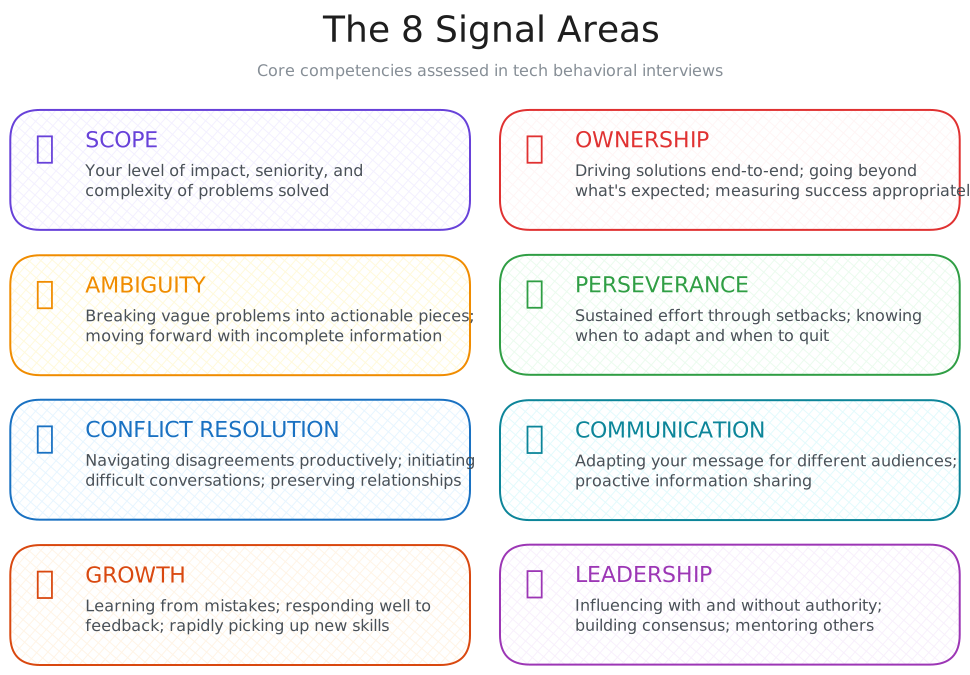
Signal Areas
These eight areas sound like a lot to track, but you'll quickly see how each one maps to things you've already done in your career.
A single question can lead to collecting signal across multiple areas. A conflict story is primarily about Conflict Resolution, but it typically includes Communication and maybe Perseverance, Leadership, and more. Your best stories will touch several areas at once.
Company Values
Cultural Assessment
The Three Question Types
"Tell me about a time..."
Hypotheticals
Values Questions
Signal Area Deep Dives
Scope
Ownership
Ambiguity
Perseverance
Conflict Resolution
Growth
Communication
Leadership
Exercise: Research Your Target Companies
What's Next
Purchase Premium to Keep Reading
Unlock this article and so much more with Hello Interview Premium